In the labyrinth of healthcare staffing solutions, inefficiencies and staffing gaps are problems that most healthcare facilities relate to. The total supply of registered nurses decreased by over 100,000 from 2020 to 2021 – the largest drop in the past four decades.
With countless studies showing how long working hours result in high burnout rates and dissatisfaction among healthcare workers, this is a problem that needs addressing fast.
Fortunately, there are ways to overcome staffing challenges and optimize your workforce. In this article, you’ll learn three innovative ways to improve your healthcare staffing solutions. First, let’s look at the role of technology in healthcare scheduling.
The use of technology: Is it necessary in healthcare staffing solutions?
Yes, and here’s why:
The healthcare industry faces staffing shortages. Longer weekly hours are increasing turnover, and nursing shortages are predicted for up to 2036.
Technology can relieve some of this pressure by attracting and retaining talent in the industry. It can automate job posting to popular hiring sites, provide a seamless onboarding experience, and allow employees to manage their payments and schedules.
Technology also optimizes caregiver scheduling to transform patient care. With effective schedules, healthcare professionals have the time and energy to provide appropriate care without feeling overburdened.
3 innovative staffing solutions for healthcare facilities
Here are some innovative staffing solutions that can help you increase efficiency, improve staff allocation and create an effective workforce management strategy for your healthcare organization.
1. Use a centralized healthcare staffing solution

A centralized staffing solution helps reduce errors and saves time while seamlessly transferring data between solutions.
Empeon’s centralized platform tracks hours per patient day (HPPD) — a unique feature that measures the duration of care patients receive in a single day.
It shows healthcare providers’ commitment to patients, as well as their productivity and efficiency. With this information, you can improve your resource allocation, optimize staffing schedules and ensure patients receive the care they need.
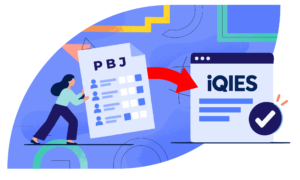
Empeon’s software also supports payroll-based journaling (PBJ), a requirement of the Affordable Care Act (ACA) that nursing homes submit to the Centers for Medicare and Medicaid Services (CMS). PBJ helps the CMS analyze and compare staffing data to understand how staffing levels impact quality patient care.
Empeon also takes the guesswork out of calculations to generate the number of hours worked, remaining, etc., to seamlessly track working hours.
There’s a lot of workforce management software available. To narrow it down, here are the key features to look for:
Staff scheduling automation.
Using automation, you can efficiently create schedules to meet patients’ needs. It also allows employees to watch for and regulate conflicting schedules.
Performance tracking.
By monitoring metrics, including labor productivity and quality of patient care, you can identify ways to improve efficiency and pinpoint gaps in employees’ skills (which you can overcome with training and development — another way to increase employee engagement and boost retention).
HR reporting.
Gather key insights into your workforce planning with reporting features. These reports can help you anticipate staffing needs, identify skill gaps and plan for future recruitment — all of which allow you to create an effective talent acquisition strategy.
2. Create agile staffing pools

An agile staffing pool is a group of employees that can work across different areas of an organization. These employees have versatile and transferable skills, meaning they can perform tasks in other areas of healthcare.
These staffing pools are a great way to create a more flexible workforce. If employees are sick or on vacation, an agile staffing pool provides staff selection to fill the department gaps. Or if there are unexpected fluctuations in patient volume, you can still meet patient demand.
Here are a couple of tips to get started on creating an agile staffing pool:
Get support and buy-in from leadership.
Start by securing the support of senior leaders. This can help integrate agile workforce strategies into wider strategic objectives, making it easier to implement successfully.
Use a platform that empowers an agile workforce.
To successfully create an agile staffing pool, you need a flexible and collaborative platform. The platform should be adaptable to change and able to share information between team members. With Empeon, for example, cross-trained employees can swap shifts and manage their schedules to fill gaps in other work areas.
3. Provide a flexible employee experience

Studies show that self-scheduling and flexibility can reduce turnover rates and increase retention. Why? Because employees get a better work-life balance and a happier work environment.
Technology offers flexibility in a busy healthcare setting. Again, take Empeon as an example. Healthcare workers can use the scheduling software to swap shifts, determine shift preferences and set a maximum number of working hours weekly. Still, the system also considers patient demand alongside these requests.
A suitable staffing model can also promote flexible scheduling for healthcare staff.
For example, a fixed staffing model allocates the same number of staff to each shift, regardless of patient load, but it doesn’t allow much room for flexibility. On the other hand, a variable staffing model adjusts staffing levels according to patient volume, providing staff more flexibility with their shifts.
Use technology to improve your healthcare staffing solutions
Technology plays a vital role in healthcare staffing solutions. It helps you find more talent and retain existing employees to deliver top-quality patient care.
Empeon’s HCM platform is ideal for healthcare leaders who want to improve their staffing solutions. Refine your talent acquisition strategy, upgrade your scheduling and boost morale to increase retention and ensure patients receive the best care possible.
To learn more about how technology can improve your staff management, contact Empeon’s industry experts.