
Did you know that the government audits one in four companies because of noncompliance with ACA? Home health care agencies are particularly scrutinized and among the most likely to receive a penalty letter.
Wondering why this is? What should HHAs know and what happens if you don’t comply? Keep reading to learn key challenges, risks, and best practices for easier compliance.
What is ACA?
ACA stands for the Affordable Care Act. It is the healthcare reform policy passed into law in 2010 that aims to lower healthcare costs, improve access to healthcare, and boost care quality. The law often changes but initially brought in sweeping changes to insurance premiums and coverage, tax benefits and penalties, and employer responsibilities.
What is ACA compliance?
Under the ACA, large employers with 50 or more full-time employees, called an ALE, must offer affordable health insurance that meets minimum standards to 95% of the full-time workforce and their dependents. You must also issue certain notices and file an annual return outlining that coverage.
These include:
- Notice of coverage and benefits
- Summary of Benefits and Coverage
- Annual statement and return of benefits offered
ALEs must also withhold and report a 0.9% Additional Medicare Tax on employees with wages over $200,000. If you have fewer than 50 full-time employees, you are a small employer and don’t have to offer coverage. But you do still need to file annual returns.
Having said that, ALEs have some flexibility. For instance, large companies can offer minimum, affordable coverage or pay an employer-shared responsibility fee to the IRS.
Why ACA compliance is important
ACA compliance for home health care agencies is simply part of doing business and hiring workers. It’s a legal requirement, just like you must give your staff breaks during their shifts and time off to rest.
It also keeps your staff happy. Finding health insurance can be very stressful for people and families, but job-based insurance simplifies the process with cheaper options and less time searching.
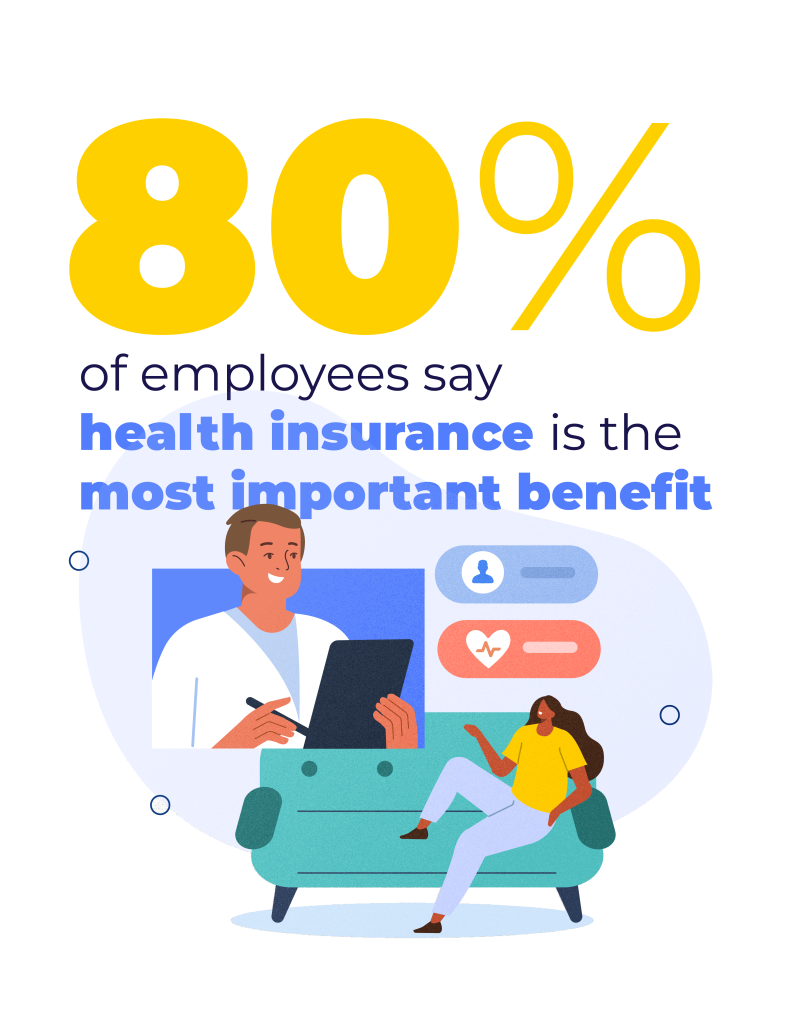
Affordable plans help ease the financial stress and burden of healthcare, a major job perk. Surveys show that 80% of employees say health insurance is the most important benefit during the job search, and 83% say it’s extremely important.
Challenges of ACA compliance for home health care agencies
ACA compliance is complex for almost any company, but home health care agencies face unique challenges because of shift work and varying schedules. A few key challenges are common.
Agencies with 50 or more full-time employees are required to provide health insurance to all full-time and full-time equivalent (FTE) staff. The ACA defines full-time and FTE as working an average of 30 hours per week or 130 hours a month. But home health care staff and nurses work varying shifts and hours, making it tough to sort out who qualifies for coverage.
For example, you might have some staff who always work at least 30 hours or about two and a half 12-hour shifts. But you might also have part-time or hourly staff that catch a few hours here and there but, together, actually end up meeting the minimum hours by the end of the month.
Here’s another example that can affect an HHA. Let’s say you hire two part-time staff instead of one full-time, but their hours together are equivalent to one full-time employee. In this case, you must include those hours in your full-time count, which may bump you to the 50-employee cut-off, changing your ACA duties. Unfortunately, it’s easy to miss these hours and business can end up in hot water.
Once you hit that 50 full-time employee threshold, the challenge shifts to making sure insurance is available for 95% of staff. The solution may seem like a no-brainer: just offer it company-wide as a benefit for all full-time staff.
But if your part-time staff counts as FTE, it becomes tricky to sort out who should have access to coverage and who shouldn’t. HR policies don’t always match ACA regulations, which can complicate things.
Under ACA, an affordable plan is only affordable if premiums fall within a percentage of your staff’s household income. In 2024, an affordable plan has premiums less than 8.39% of household income. In 2025, the premium must be less than 9.02%.
On top of that, these affordable plans have to meet the minimum value and coverage. Offering plans that fit these guidelines is tough without the right tools.
Risks of ACA noncompliance
Noncompliance leads to steep costs for agencies, from employer payments and penalties to audits, legal action, and even property seizure. The government is clear that following ACA laws is critical and will audit, impose fees, lien property, and prosecute if necessary.
Employer-shared responsibility provisions (ESRP)
Some companies choose to pay the ESRP instead of offering insurance, but you may also owe the fee if you make mistakes or don’t comply with ACA laws. Some agencies may also believe the law doesn’t apply to them, which can lead to payments.
These payments can be expensive and can happen in a few cases, such as:
- You offer insurance to less than 95% of your full-time staff
- You don’t offer insurance at all when you should
- You offer plans that aren’t affordable or don’t meet minimum standards
The fee is $2,970 per full-time employee per calendar if you choose not to offer insurance, excluding the first 30 employees. If you offer unaffordable plans, the fee goes up to $4,460 per full-time staff with the plan. These fees change based on adjustments for the year, and quickly add up across a large workforce.
Costly penalties
Not complying with ACA laws leads to penalties. The penalties are often per employee, which can quickly get very expensive for large home health care agencies.
Penalties include:
- Failure to file a return: $270 for each return
- Failure to provide an accurate payee statement: $270 per statement
- Providing false or fraudulent information: $25,000
- Knowingly violating the Act: $250,000
- Using, disclosing, or sharing confidential information: $25,000
Employers also face $100 excise tax fees for each instance the plan fails to meet minimum standards. For example, if a plan doesn’t cover pre-existing conditions, you will pay a $100 excise tax. This will occur in every situation where the plan doesn’t follow the law.
Best practices for home health care agencies ACA compliance
So, how do you keep your agency in order and manage the challenges with health insurance and ACA compliance? A few best practices and key strategies can make the process much easier.
Track hours digitally
Home health care agencies often have large teams, with caretakers traveling to different locations. Mobile teams mean that information needs to flow easily into one central location to prevent major errors for payroll and ACA compliance. Digital tools that include time importing to payroll are a solution.
Accurate time and attendance records simplify the workflow and eligibility calculations for your HR team. Your payroll and HR staff can use that data and run reports to count hours and monitor the large employer status and 50 full-time employee threshold.
Sync data
Better yet, use a smart benefits admin solution that syncs your hours and plan options to monitor your status. With software, your data automatically updates with the monthly or look-back method, giving you a quick insight into changes and plans. Connected data makes it easier to track your compliance and saves time, boosting your HR efficiency.
Document your plan offers
Once you identify your status and eligible employees, document everything. Use next-gen tools to track the notices you send, plans you offer and when, and plans your employees choose. These documents help you prove your compliance during an audit or year-end filings.
Simplify filing with tax tools
Many of the ACA penalties are related to filing mistakes or misses. Tax software that integrates with your payroll and HR solutions helps you generate statements and returns with a single click. Then, you can review your returns and file with the IRS for quick, easy, and accurate reporting.
Experience easier ACA compliance with Empeon
Ensuring ACA compliance can be challenging, but Empeon makes it easier with cutting-edge, intuitive and user-friendly solutions. Track employee status, store health plan data, document compliance, and quickly generate and file tax returns in one dashboard.
With digital tools, you simplify your process and have free time to spend supporting your workforce. Get in touch to discover Empeon in action.