Healthcare administration professionals often grapple with challenges that impact employee efficiency. Managing dynamic scheduling, ensuring compliance with ever-evolving regulations, and navigating the nuances of employee engagement are common examples.
A workforce optimization system can address these challenges. It provides healthcare organizations with an efficient solution to manage and empower employees and ultimately deliver better patient care.
This article explores how workforce optimization software works, how to choose the right system, and shares three top workforce optimization systems used by healthcare teams to streamline their operations.
What is a workforce optimization system?
A workforce optimization system enhances the productivity and efficiency of employees in an organization. It allows HR professionals to manage employee schedules, optimize employee performance and, in healthcare, ensures patients receive top-quality care.
Here are more details about how these features benefit healthcare companies:
Workforce Scheduling
Create and manage employee schedules from a centralized hub. Consider skills, employee availability and shift preferences to improve employee satisfaction and meet patient expectations.
Quality Management
Keep tabs on the quality of care, ensuring patients receive the necessary treatment and care.
Performance Management Systems
Track business performance across your organization to identify areas of improvement and support staff to fill any gaps in their skills.
Time Tracking
Monitor time spent on specific tasks or with patients for a birds-eye-view into shifts. Use this information to improve scheduling, prevent unnecessary overtime, and ensure staff use their time as efficiently as possible.
AI and Automation in Workforce Optimization
Artificial intelligence and automation are reshaping how healthcare companies operate. In nursing homes, that means smarter electronic health record systems, remote patient monitoring, and AI tools that not only speed up caregiver hiring by scanning applications but also help manage staffing shortages by predicting scheduling gaps before they happen.
On the policy side, CMS is advancing the use of AI to improve operational excellence across Medicare, Medicaid, and CHIP, leveraging its expansive healthcare data portfolio to drive innovation and efficiency.
All of this points to a future where AI-driven scheduling, smarter staffing forecasts, and automated admin work aren’t just nice-to-have — they’re becoming the new normal in healthcare.
What are the benefits of workforce optimization solutions in healthcare?
The most significant benefit is improving workforce management across your organization. With the right software, you have better control of your workforce planning. Your chosen software will also optimize employee schedules to reduce costs and provide patients with the best care.
But this isn’t the only perk. Here are a few of the other benefits that impact healthcare organizations:
Improve Operational Efficiency
A workforce optimization system helps you streamline workflows by reducing inefficiencies and minimizing manual work by automating business processes.
Use Strategic Workforce Planning
Advanced workforce management solutions use predictive analytics tools to create demand-based schedules. These features help you align staffing levels with patient demand, reducing operational costs and addressing scheduling challenges that can lead to stress and burnout.
Deliver Better Patient Care
By creating a more efficient workflow using workforce optimization, you can provide patients with shorter wait times, faster diagnosis and quicker treatment.
Comply With Regulations
Workforce management software simplifies compliance procedures so your organization aligns with healthcare and employee regulations to avoid unwanted fines.
Ensure Credentials and Licenses Stay Up to Date
Workforce management systems can automatically track staff certifications and licenses, ensuring compliance while reducing administrative burden. By simplifying credential monitoring, these tools help avoid fines, keep operations efficient, and ensure patients are cared for by qualified professionals.
The best workforce optimization tools and healthcare software in 2025
The following are the standout workforce optimization systems for 2025 and beyond. These platforms can improve the efficiency of your healthcare facility, ensuring optimal performance across your entire organization.
1
Empeon
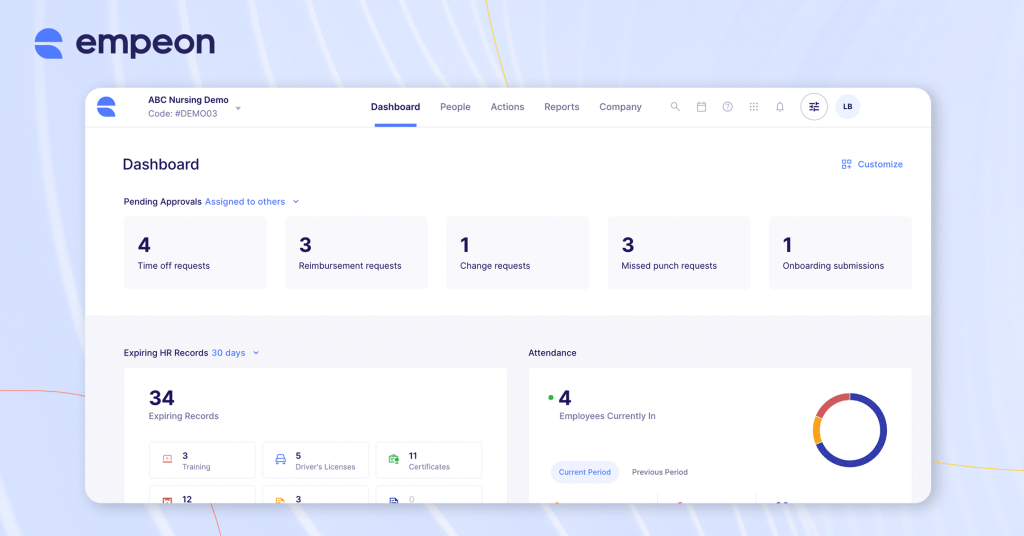
Empeon is a human capital management (HCM) platform. From hiring and onboarding to time management and benefits administration, the software helps healthcare professionals manage the entire employee lifecycle.
When it comes to workforce optimization, here’s how Empeon can help:
- Enable caregiver shift swapping. Streamline scheduling by allowing nurses and caregivers to swap shifts but set parameters to ensure that shifts meet patient needs. For example, if you need someone who’s comfortable with physical handling, you can ensure the shift swap accounts for this.
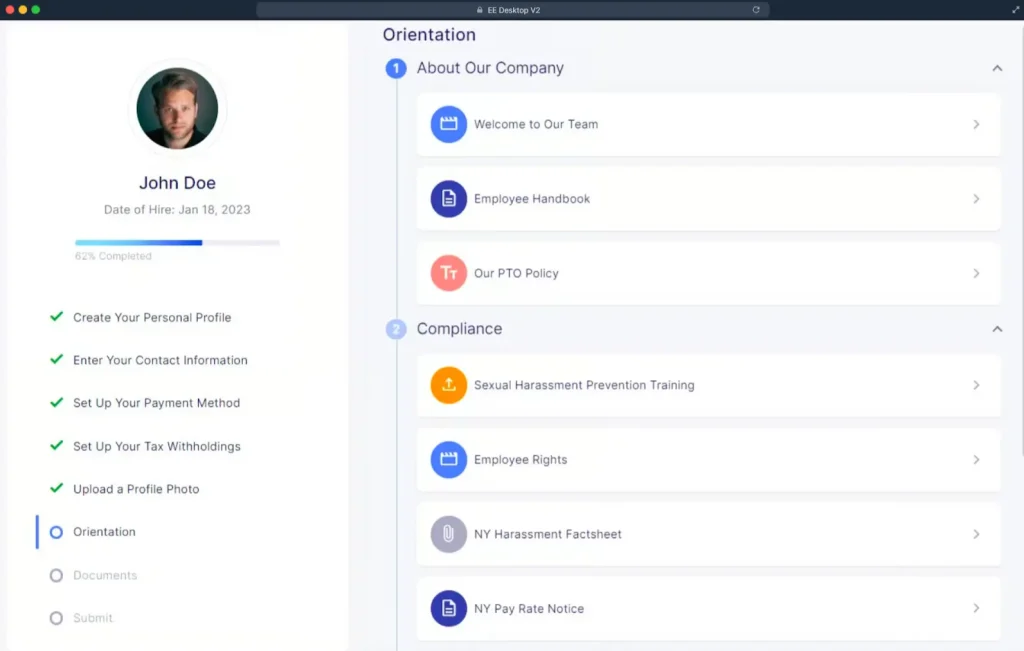
- Onboarding. Save time by automatically onboarding potential employees. Centralize all the paperwork, training and certifications to track progress easily and ensure all new staff have the information they need before working with patients.
- Manage employee benefits. Access all the tools and features you need to manage employee benefits in a central location accurately. Calculate compensation premiums, manage stipends, track usage and monitor eligibility in real time.
- Store electronic employee records. Provide instant access to employee information with Empeon’s digital records. Monitor skills and training, track employee performance and use self-service tools so employees can easily update their information to increase accuracy.
- Increase security. Keep all your employee and patient data secure with Empeon’s robust data security measures. Configure role-based access, encrypt data and track changes to create a digital audit trail.
- Ensure compliance. Use Empeon to comply with healthcare regulations, like the Affordable Care Act (ACA). Simplify IRS reporting, track employee waivers and prevent unwanted penalties for non-compliance.
Book a demo to try this HR software.
2
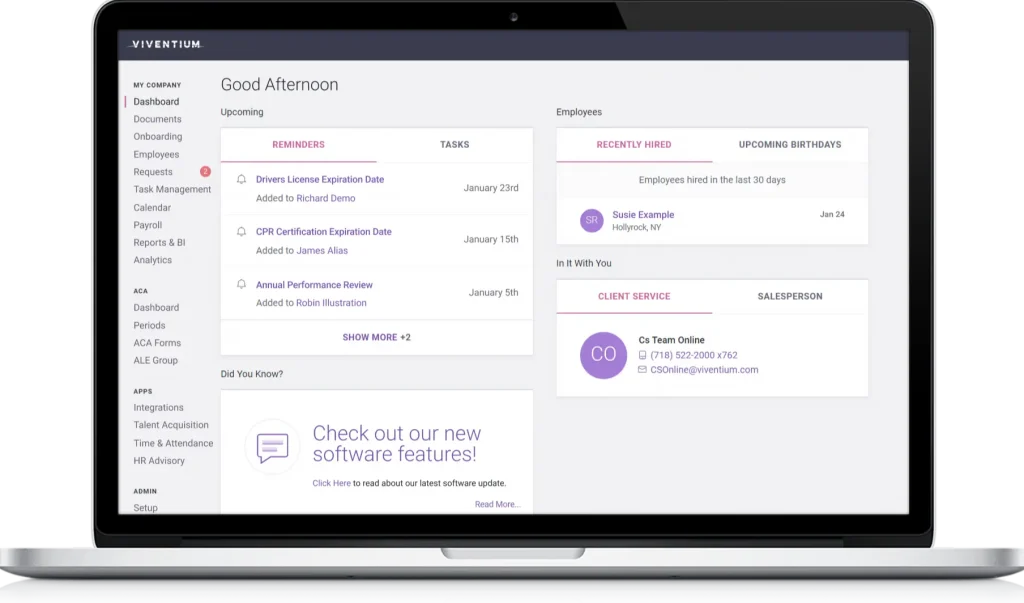
Viventium
Here are some of the other key features:
- Recruitment
- Payroll
- Benefits administration
- Time tracking
The workforce optimization software is ready to use when you create an account, but certain areas aren’t fully adaptable, making it hard for users to optimize their workforce effectively. For example, generating several reports into a single file can be complicated.
It helps organizations manage HR services, from recruitment to benefits management — plus a few other features:
- Time tracking
- HR compliance
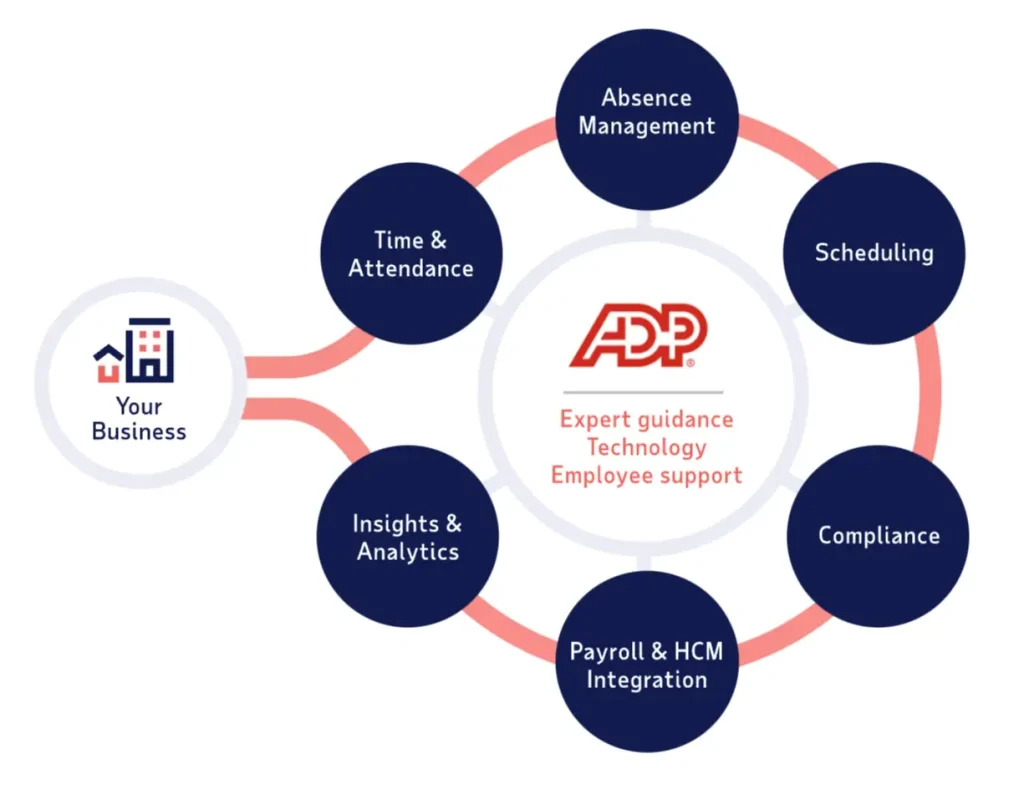
- Integrations
- Payroll
ADP caters to businesses of all shapes and sizes but is not specific to healthcare. As a result, the software may not meet all the needs and requirements of a healthcare organization, such as ensuring compliance with healthcare regulations.
How to choose the best workforce optimization tools
Although these are excellent recommendations for a workforce optimization system and healthcare software, there are a lot of other platforms out there to choose from. Here are some of the key features to look out for to help narrow down your search:
- Prioritize customization. Find a system that allows you to customize specific processes and requirements of your healthcare facility. This helps you create a system well-suited to your organization’s needs, employees and patients.
Case Study
FreedomCare and WeCare are two examples of how customizable software can improve your entire operation, from faster payroll and easier reporting to saving hundreds of labor hours while consistently paying caregivers accurately.
- Ensure security and compliance. Given the sensitivity of healthcare data, choose a system that prioritizes robust security measures and compliance with industry regulations.
- Assess scalability. If your organization grows, you need a platform to support your expansion and accommodate changes in workforce size and organizational structure.
- Consider integration capabilities. Choose a solution that integrates with your HR, payroll, and other relevant tools to create a combined and seamless digital workflow. For example, Empeon integrates with payroll providers like ZayZoon so employees can easily access their wages.
Workforce optimization strategies to improve employee efficiency
Using the right technology is a pillar for the success of workforce optimization — but how you use technology is also an important part in its success.
Here are some of the strategies you can implement to use technology to its full potential.
Create a comprehensive onboarding program
The better your onboarding process, the more efficiently new hires integrate into the workforce. And more than this, an effective onboarding experience can influence your retention rates.
When onboarding fails to meet employee expectations, 80% of them plan to quit. This highlights the importance of organizations providing an effective onboarding experience, especially given that employee retention is a key focus for the healthcare industry.
Use your workforce optimization system to create a seamless and engaging onboarding experience by:
- Providing all the key documentation to read and sign.
- Covering all the key aspects of orientation to make new hires comfortable and knowledgeable.
- Delivering sufficient training on systems, processes and day-to-day responsibilities.
Track performance metrics and key performance indicators (KPIs)
Setting clear, quality metrics and KPIs helps you measure the success of your workforce optimization efforts.
Imagine that you’re using the system to measure your employee productivity solutions across the facility. This means using advanced workforce analytics to measure the following information:
- How efficiently patients move through the care process
- Time spent with each patient
- Use of resources
- Readmission rates
By tracking these insights, you can determine whether staff are meeting the desired productivity levels. If not, you can make an informed decision on improving and achieving the required metrics.
If you want to measure employee engagement, you could track overtime requests, attendance, benefits usage, etc. Whatever you want to achieve, set clear, measurable metrics to quantify success.
Use Empeon to manage your healthcare workforce

From nursing homes and senior living to home health and rehabilitation centers, workforce optimization is essential for any healthcare facility, and the best workforce optimization tools can assist you.
The right system can improve the entire workforce management process. Healthcare leaders spend less time manually managing employees and more time ensuring patients receive quality care.
Contact our industry experts to find out more about how Empeon can help you manage your workforce, optimize your processes and improve the patient experience.