About 17 million people work in healthcare in the US, and 1.4 million work in home care services. Healthcare is the largest national employer, but the effects of burnout are high. Approximately 45% of RNs and LPNs report feeling burned out a few times each week, and the same sources expect a 6% shortfall of RNs by 2037.

Simply put, demand for caregivers is growing faster than the supply, making general health and home care staffing a major hurdle. Throw in issues like unmanaged overtime and a lack of trust, and it’s a recipe for disaster.
Employers must focus on building confidence with their workforce.
Why trust matters in the workplace
Trust is the bedrock of any healthy relationship, especially at work. Trust is essential for leaders to guide effectively, but also for employees to thrive. High-trust workplaces lead to greater job satisfaction, higher-quality work, and stronger employee retention.
Promotes job satisfaction
Many factors affect job satisfaction, from personality traits and life events to fairness at work and the job itself.
74.1% of healthcare workers who lack trust in leadership say they’re dissatisfied with their workplace and often cite a poor work environment as the reason. Even more concerning, one in three say it’s enough to make them try leaving for another position or company.
On the other hand, 58.3% of employees in high-trust organizations report strong job and professional satisfaction. Trust fuels commitment to the organization and creates a more positive emotional experience at work.
Encourages high-quality work
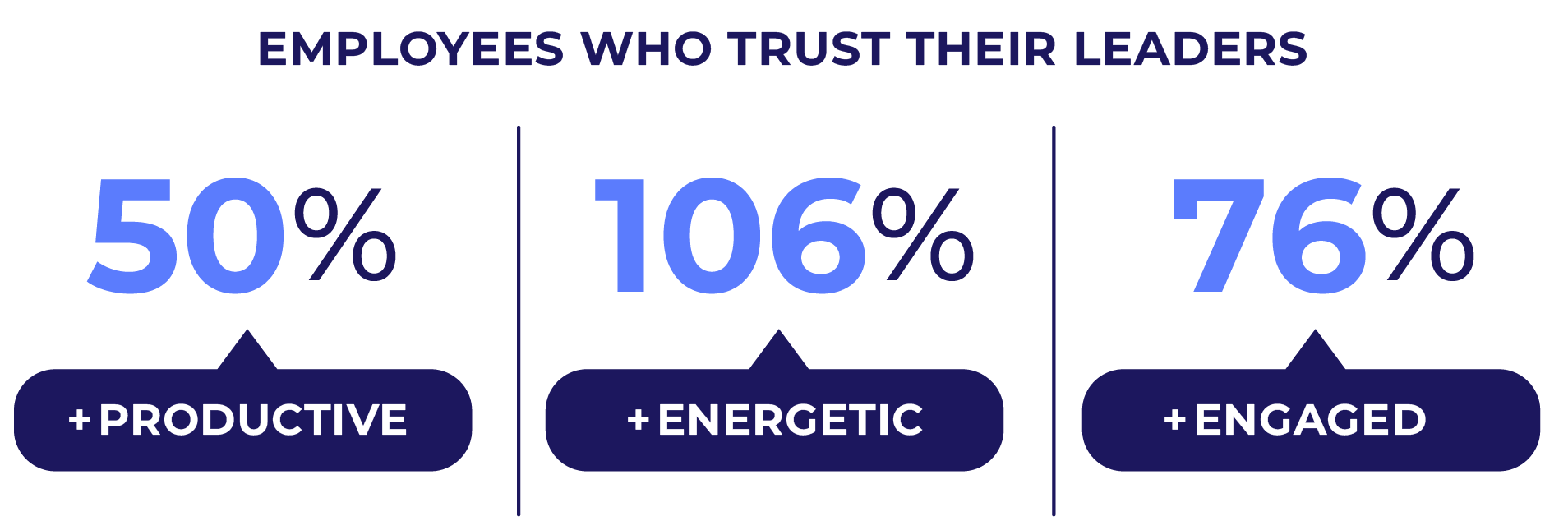
Employees who trust their leaders are 50% more productive, 106% more energetic, and 76% more engaged.
Healthcare workers in particular report trust in leadership as a major factor influencing their work performance: 47.7% of healthcare staff say they accomplish greater-quality work when having high trust in leadership. Better patient care is the result.

Enhances retention
Job satisfaction naturally leads to stronger employee retention. When home care workers trust their supervisors and managers, relationships deepen, and a sense of belonging grows, building the foundation for lasting loyalty.
This high-trust and high-engagement culture is a positive one that employees don’t want to give up. In fact, research shows that organizations with low engagement and trust have a high turnover rate and vice versa.
The reality of trust in healthcare and home care staffing
Unfortunately, healthcare and home care staffing still fall short of the mark. In 2021, 34% reported low trust in leadership, while less than 45% trusted leaders in 2022.
These trends might be expected with the stress of the pandemic, which highlighted underlying issues. However, it hasn’t improved since then.
In 2023, nearly half of healthcare workers—42.9%—still reported low confidence in leadership, and almost all staff said the amount of their trust affected them professionally.
So, what gives? Why is there a persistent problem?
A few factors include:
- High workload
- Unfair treatment
- High stress
- Resulting levels of burnout
However, home care workers face unique challenges that impact how they feel about the workplace. In particular, home care staffing, such as nursing assistants and personal care or home health aides, typically earn modest wages and work in challenging environments..
Home care can be physically demanding; oftentimes caregivers work alone, and in addition to lifting and moving patients, they may deal with aggression, as well as patients with physical and mental health problems. Additionally, many workers don’t have access to health benefits or a retirement savings plan.
These concerns combined with an industry history of low pay and overrepresentation of marginalized workers create frustration amongst workers and a feeling of being undervalued.
4 real-world tips to start building trust in home care staffing
On a more positive note, it’s possible to correct these issues. It takes organizational shifts in HR management, internal policies and practices, and patient care.
Shift your communication style
Building a respectful and reciprocal relationship where staff feel seen and heard is a cornerstone of an effective workplace. Maintaining communication between employees and managers/HR can help, but that can be especially difficult for home care workers who spend most of their work hours outside of an office setting.
Still, 77% of surveyed staff say clear communication is a key leadership behavior that helps build trust. This includes:
- Transparent and honest communication
- Availability
- Follow-through
- Seeking out staff input
Focus on building connections with your staff. Provide regular updates and feedback, ask for input, and share information openly and candidly. Establish an open-door policy and prioritize comfort so staff feel safe to suggest ideas or speak up.
An in-app chat app, like Empeon’s Live chat, can simplify your communication strategy. With Live Chat, staff can ask questions, resolve issues, receive company updates, or get notifications about open shifts. You can reach your teams and share information through a secure platform rather than using personal SMS messages. It’s a quick and easy way to engage staff while maintaining professionalism and security.
Additionally, prioritize payroll accuracy to promote goodwill and trust. For example, a simple policy of issuing transparent paystubs keeps you compliant with labor laws and demonstrates integrity and honesty.
Develop your staff
Training and promotion opportunities are also important to staff. Your team wants to excel and feel confident in their positions. They also want to grow in their career.
Provide training and professional development opportunities, whether in on-site training or through course reimbursements. Digital learning management tools simplify training. You can customize workflows, track progress, and automatically update HR records to reflect the growth.
These opportunities engage your staff and help them master their skills and profession. Engaged workers are more productive, feel a sense of belonging, and are more likely to stay with their company.
Treat and pay your staff well
Your people want to be recognized and treated with kindness. Adopting fair hiring and HR management is key to positive relationships and trust.
Focus on skill-based hiring and offer competitive wages and job perks. Health benefits, 401(k) retirement plans, and additional perks, like paid time off, commuting and mileage premiums or reimbursements, or flexible work schedules, also show your staff your investment in their well-being.

Your workforce cares about your patients and wants to make a difference. Finances, however, matter, and employees need to earn livable wages. Consider providing earned wage access where staff can collect interest-free advances on earned wages immediately when a big life event or unexpected obstacles pop up.
Integrations that connect directly to your payroll solutions update records and simplify the backend for your HR staff. For employees, earned wage access (EWA) helps reduce financial stress so they can focus on patients.
Empeon partners with industry-leading EWA providers, including:
- Tapcheck
- Zayzoon
- Keeper
Additionally, using tools like automated payroll audits help increase transparency and accuracy, building trust and respect with your team. Auto-auditing alerts you to issues with double visit entries, missing hours, overtime, or missing paychecks. With audits, you can boost payrun efficiency and prevent errors before they occur.
Prioritize your workforce with Empeon
Trust requires nurturing, and there’s no better way to cultivate your relationships than to enhance the employee experience. Essential self-service tools and streamlined payroll, onboarding, scheduling, and benefits software empower your staff and encourage accuracy and development. Take a tour and discover how Empeon’s HCM solutions bring your teams together.