Strong HR security is crucial in any healthcare organization. Your HR team will have access to sensitive employee information and must manage it carefully.
For those working in a healthcare setting, there are unique security threats. For example, the industry saw a 21% increase in data breaches in one month, with almost 12 million records reported as exposed or stolen. Healthcare providers were the most affected industry by data breaches, with 30 healthcare providers reporting unknown identities accessing patient records. When you focus on security management, you can reduce the risk of an incident occurring.
Fortunately, tight security measures protect your team, patients and reputation, and the right strategy can also help you meet your legal obligations.
Giving your human resources team the right tech will improve productivity. Plus, you can improve security during the recruitment, onboarding and employment phases.
Learn how to do it in the following article.
What is HR security?
Strong HR security measures protect sensitive data through all stages of employment.
HR security should be a focus during recruitment when you’re compiling resumes and checking references. It should also be a priority when collecting and storing data during onboarding.
The benefits of a comprehensive HR security policy include:
Protecting sensitive information
Meeting compliance requirements
Maintaining your company's reputation
Handling threats and reducing downtime
Improving productivity due to more efficient processes
There are a range of strategies you can use to boost HR security. For example, switching from paper files to digital ones comes with extra layers of protection. Additionally, user permissions will ensure that only approved employees can access confidential files.
Why does HR security matter?
In 2023, the cost of a healthcare data breach was $10.93 million. Any data they can steal from your company will be invaluable for cyber criminals, who can use private patient information for identity theft or to obtain prescription medications or expensive medical services.
HR security measures help you follow any laws and frameworks that may be relevant to your organization. These may include:
One piece of the puzzle is software, which can support legal compliance. 25% of companies who use HR software said they saw a noticeable improvement in this area.
The right software can reduce identity theft risk and prevent legal issues. When you value your employees’ privacy, they’ll feel more confident working for your organization.
How to use tech to improve HR security in a healthcare setting
Technology can improve your HR security. Here are the key strategies to focus on:
1. Customize your software
Different states have rules about how you collect and store employee documents. The best solutions come with automation — so you can flag and delete files when the required holding period is over.
Integrations can also enhance the software and make it your own. However, they should be seamless and not impact the platform’s security.
2. Set user permissions
Limited access gives you the benefits of a virtual solution while protecting your employees. You can take it one step further by including two-step verification and encouraging secure passwords with a mix of letters, numbers and symbols.
3. Eliminate insecure paper files
Cloud-based HR software is suitable for both remote and in-person teams. By investing in technology, you can meet your legal obligations and reduce the need for physical storage. For example, all personnel and employment records must be kept for at least one year. Technology means you won’t need a dedicated space to store these documents.
In 2023, downtime from ransomware attacks cost healthcare organizations a massive 14.7 billion US dollars. To avoid these long periods of expensive downtime, invest in a cloud-based platform that values security — with encrypted pages, firewalls and safe data backup.
4. Protect information with data encryption
Data encryption can help protect sensitive information. This feature encodes data (scrambles); only the intended user can view it. Even if unscrupulous people get hold of a file, it will be difficult to interpret, as secure encryption methods have a huge number of cryptographic keys that an unauthorized individual couldn’t guess which is complete or use a computer to formulate the correct string of characters.
There are two types of data to consider in the healthcare industry:
Personal Health Information (PHI)
Private medical data that connects to an individual. It includes lab tests, mental health records, and payment information.
Personally Identifiable Information (PII)
Information that identifies an individual. It includes social security numbers, dates of birth, and residential addresses.
Today, most cloud-based software comes with encryption, which is essential in any healthcare setting. The solution you choose should encrypt anything that gets transmitted during a user session.
5. Create digital audit trails
Alternatively, if a user modifies the wrong information, managers can track it back to their account. You can use these insights to provide better training or disciplinary action.
Digital audit trails allow you to meet your compliance obligations and ensure your employee records are accurate.
Alternatively, if a user modifies the wrong information, managers can track it back to their account. You can use these insights to provide better training or disciplinary action.
Digital audit trails allow you to meet your compliance obligations and ensure your employee records are accurate.
6. Invest in staff training
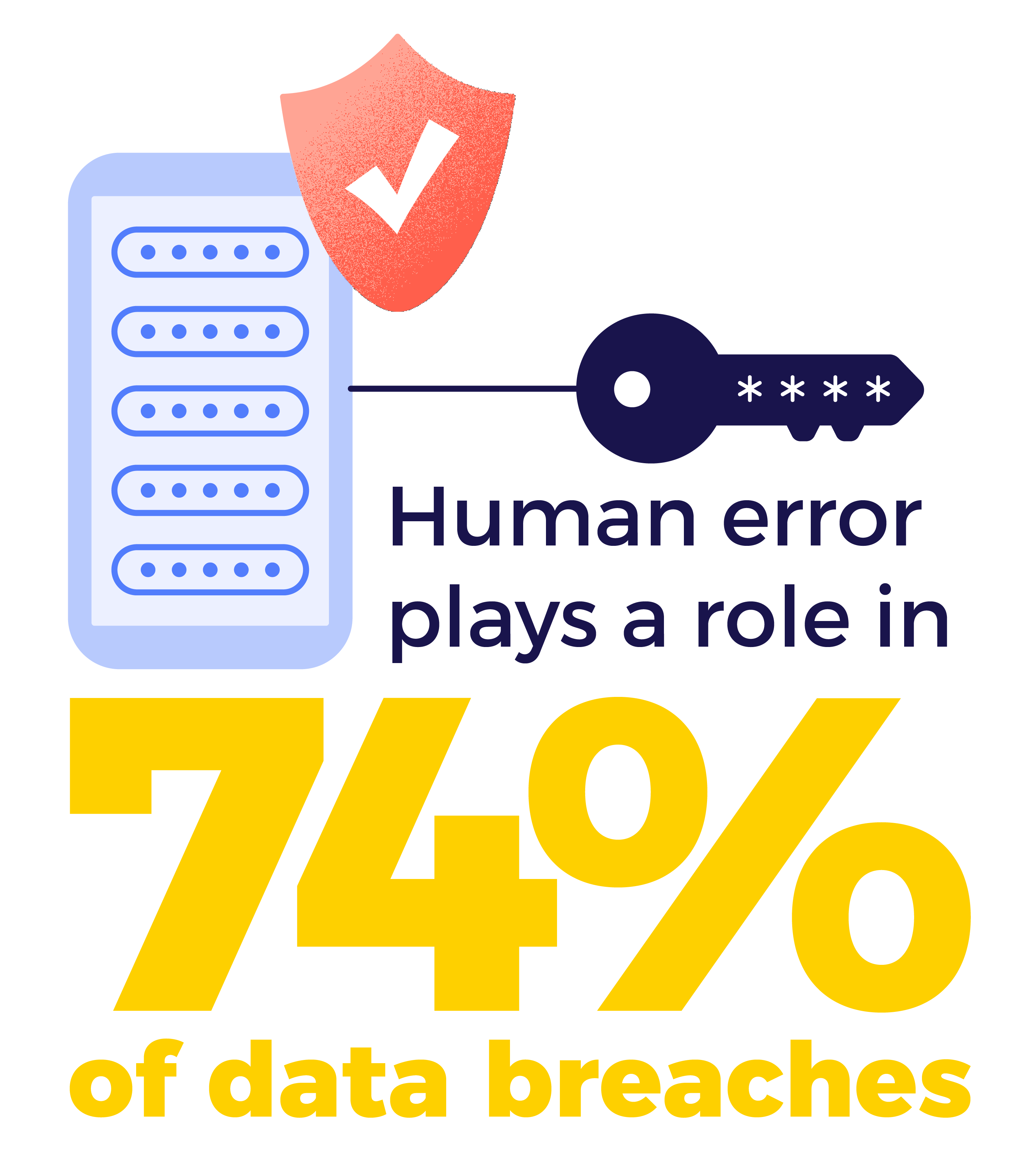
One of the most important HR security measures is staff training. In 74% of data breaches, human error plays a role. While breaches are often due to innocent mistakes, the cost to your healthcare business can be devastating.
By creating clear policies and procedures, you improve overall security. Whether it’s phishing risks, regulatory requirements or secure passwords, start educating your team today.
Staff training can be completed in person, with a specially-designated app or using a program online. For example, you may have staff training days, mentorship programs, or support employees to complete a college degree.
Technology changes quickly, so training should be an ongoing investment.
Overcoming HR security challenges in the healthcare industry
The healthcare industry is a major target for cyber criminals. Companies have access to sensitive data and protecting it is a legal and ethical obligation.
It’s not just patient files that need safeguarding. HR teams must collect and store employee files, often for months or years. With strong HR security and the right technology, you can protect your workers — and your organization’s reputation.
Empeon has all the features you need — data encryption, digital audit trails, secure document storage, user permissions, customizations and more — to ensure your organization is protected.
Ready for the next step? Get in touch with one of our industry experts to learn more.