


Why Home Care Company Culture Matters

Why home care company culture is key to caregiver retention

You may be wondering: my caregivers work in patients’ homes all day, so why does company culture matter?

It’s simple: the caregiver who just spent three hours with Mrs. Johnson, helping her shower and reminding her to take her medication, is not just representing themselves—they’re representing you.

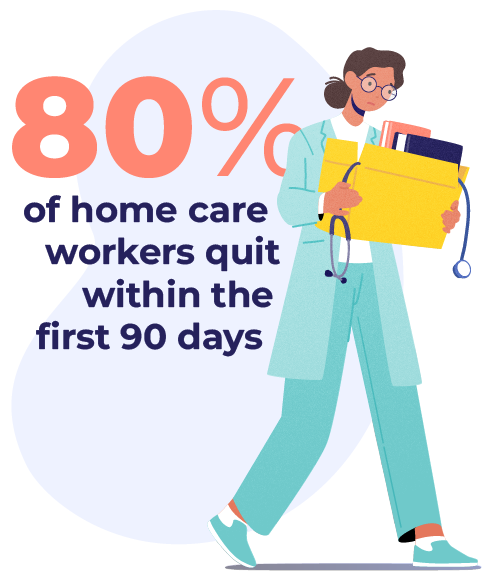
Your company culture travels with nurses and caregivers into every home, every conversation, every moment when a family trusts them with their loved one. And right now, with nearly 80% of home care workers quitting within the first 100 days, your culture might be one of the few things standing between keeping good people or watching them walk out the door.

80% of home care workers quit within the fist 90 days

Only 15% of healthcare workers say they’re staying at their job because they feel valued. And as we’ve seen, retention is clearly a challenge in the industry. In home care, where trust between caregivers and patients is essential for quality care, you simply can’t afford to keep losing the people who actually care about doing great work.

A positive home care company culture can lead to happier employees. Employees who feel respected, have a voice, and receive clear direction have higher job satisfaction. Job satisfaction leads to higher performance and productivity and lowers turnover.

The impact of home care company culture on patient trust and care quality

However, there are three critical points to consider:

  • Managers and leaders set the cultural tone
  • Once the culture is set, it’s hard to change
  • Like breeds like, so positive leadership leads to positive outcomes and negative culture to stress and tension

Most importantly, home care company culture affects patient outcomes and impacts care quality and delivery. In a positive workplace, staff have the autonomy to develop stronger patient relationships, leading to more trust and confidence between healthcare workers and patients.

Overcoming staffing woes through home care company culture

Staffing shortages are still a concern for home health agencies. While retention rates have generally improved, meeting the rising demand for care is still top of mind for leaders. Recent surveys report that 35% of agency leaders say staffing issues are still a leading concern.

Improving or focusing on your workplace culture is one way to attract and keep your staff. When staffing is already a concern, you can no longer afford to ignore your culture. Otherwise, you create a revolving door and lose the ability to meet basic agency and patient demands.

In the short and long term, that translates to staffing gaps, an inability to take on new patients, and lost revenue. Instead, focusing on supporting and respecting staff and building connection and autonomy helps them feel valued and encourages them to stay.

4 ways to build an excellent culture

There is no one right way to build a home care company culture. Each employee and company has different needs, and the best method is to listen to what your staff want from their workplace. However, a few basic practices can set the tone and create an empowering environment.

1. Offer job perks and incentives

Offering job perks to support a strong home care company culture

Employees give most of their time to their jobs and workplace, so, naturally, they want some perks in return. In a survey of nurses, more than 75% said they wanted to leave because they could find better wages and benefits in other industries.

Offering enticing perks and incentives can help attract staff and encourage them to stay. These might include:

2. Improve communication

Transparency and open communication are the bedrock of a positive home care company culture. Encouraging your staff to share ideas and concerns, report internal and external issues, and offer feedback promotes trust.

However, you must also demonstrate integrity and honesty from the top down. Share information, keeping staff informed about changes and important company matters, and act on feedback. Employees who feel heard and see their needs and frustrations addressed feel valued and respected.

One of the easiest ways to improve communication is to use digital tools. An employee self-service dashboard, for example, provides staff with the answers to most questions. They can find essential documents and receive company updates in one place without having to visit an admin.
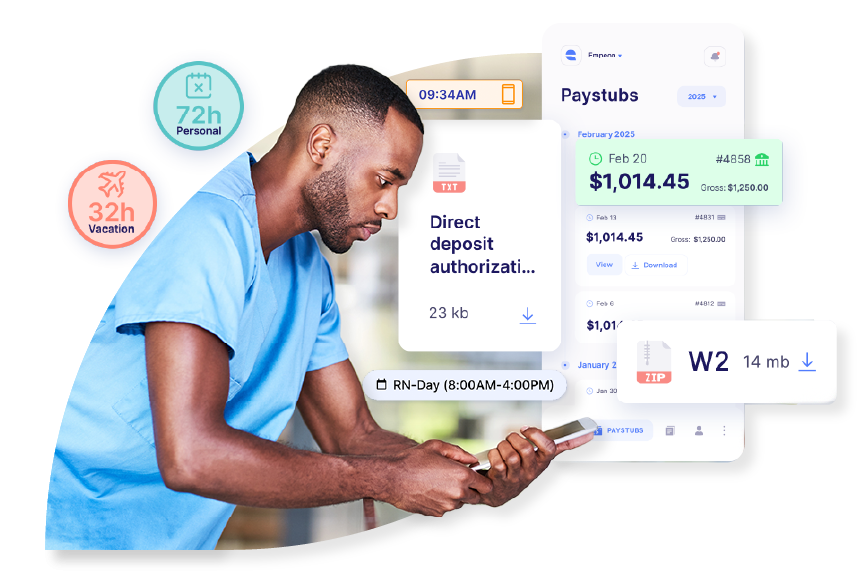
Additional features, like Live Chat, put you in direct communication with your staff through instant messages. Employees can ask questions and quickly get answers while they’re in the field and working in patient homes.


3. Prioritize personal well-being

Employee well-being is another top concern among nurses and home care workers. In a recent survey, nurses reported that the main change they want at their job is more compassion, support, and respect. They need employers to understand their needs and recognize that they may need help.

In a perfect world, your staff would leave their personal lives at home, but that’s just not reality. While your staff aim to be professional and set aside issues at work, family duties, financial stress, health problems, and relationship challenges all impact their state of mind.

Management practices and benefits can ease stress for employees so that they can perform their best at work. These include:

4. Clarify your company mission

Clear guidance and goals give your staff purpose to their work. In general, healthcare workers all want to connect with their patients, improve their lives, and ease suffering. However, centering your team on a specific goal within these parameters gives them a deeper connection to your agency.

For instance, you might aim to help patients stay independent at home or prioritize personalized care. Whatever the goal, clarifying that with your staff helps build unity within your teams.

But how do you share these ideas and policies? Digital onboarding tools with customizable templates and pathways are an easy solution. Add policies or videos that share and simplify the mission so they understand the goal and culture from the start.

Foster success and empowerment with Empeon

Empeon connects and supports your caregiving workforce. Book a Demo

Your home care company culture develops organically but also purposefully. The best way to ensure you retain your staff and promote a positive workplace is to be intentional about your mission, attitudes, and behaviors.

The right tools, policies, and practices can make all the difference, promoting empowered employees, self-responsibility, accountability, and autonomy. Empeon’s all-in-one payroll and HR platform gives you all the resources and digital features you need to connect your staff and enhance the employee experience. Get in touch to learn more.

PBJ reporting errors illustration

5 PBJ Reporting Mistakes Hiding in Your Data and Costing You Stars

If your skilled nursing facility is doing everything right on the floor but still struggling to hold onto four or five stars, the culprit might not be care quality. It might be buried in your Payroll Based Journal (PBJ) data.  As we know, the Centers for Medicare & Medicaid Services (CMS) requires all

Read More »
Illustration showing a mismatch between PBJ census (95 residents) and MDS census (92 residents), with a five-star rating partially reduced and a scheduler reviewing a Q1 2026 calendar.

Your Scheduling Decisions May Be Tanking Your CMS Five-Star Rating: Here’s How

This scenario happens more often than we realize: your facility got dinged on your CMS Five-Star rating and your Total Nursing Hours score dropped, even though you know your staffing levels haven’t changed. You check your PBJ reports, and everything looks accurate. Even your MDS coordinator confirms all assessments were submitted on time. So, what went wrong?  The problem isn’t that

Read More »