Picture this: It’s Monday morning at a skilled nursing facility. Agency staffing data from the weekend sits in a system that doesn’t talk to payroll. Two new hires are in onboarding limbo — credentialed but not yet in the schedule. And someone is manually reconciling timesheet discrepancies before Friday’s payroll run. This is a composite scenario, but one that healthcare HR and payroll leaders recognize easily.
That’s the hidden cost of disconnected workforce management for healthcare. It doesn’t appear as a line item. It shows up in unplanned overtime, agency dependency, payroll corrections, and the hours your best people spend managing systems instead of teams.

The Literal Cost:
Payroll Errors Are More Expensive Than You Think
Companies make about 15 payroll corrections each pay period, according to a 2022 EY study—and those fixes add up fast. Time and attendance errors are a major cause, costing businesses thousands each year.
40% of small to mid-sized businesses face IRS penalties for incorrect payroll filings, with the average penalty running $845. In healthcare, including long-term care, where margins are already thin and Medicaid reimbursement rarely keeps pace with costs, penalties can add up quickly. The most common and costly error types, per EY’s research:
Missing or incorrect time punches — $78,700 per 1,000 employees annually
Sick time not entered — $705 per incident
Employee not entered into the system in a timely manner — $635 per incident
W-4 setup errors — $539 per incident
Health savings plan setup errors — $6,800 per incident
In industries like skilled nursing and home care, the stakes are even higher. Teams manage complex pay rules and shift structures—differentials, overtime, PTO, and rates that vary by role and location. When time-tracking and payroll systems aren’t connected, data is moved manually, which increases the risk of errors. Missed punches can easily turn into time-consuming or expensive fixes. If your payroll is leaking money, the gaps are often hiding in plain sight.
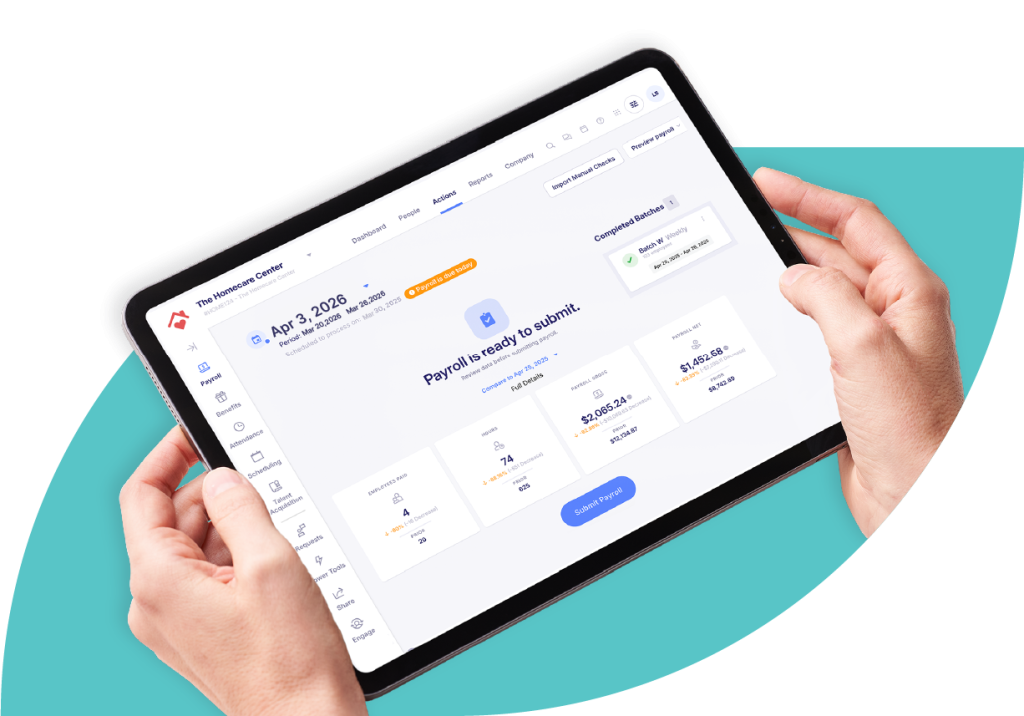
The fix: A connected workforce management platform eliminates manual handoffs where errors originate. When time and attendance data flows automatically into payroll — with built-in audit logic that flags anomalies before processing — the 15-corrections-per-pay-period problem becomes a platform problem to solve, not an HR problem to manage.
What the Data Reveals About Connected Workforce Management for Healthcare
Empeon analyzed its client base to measure the impact of its smarter payroll auditing, and the results were significant. Clients save over $43 million each month, or more than $521 million annually. On average, that’s more than $1.5 million saved per client each year.
These are savings that come from catching what disconnected systems let slip. The money was leaving, and the technology stopped it.
The Figurative Cost:
What Disconnection Does to Your Workforce Management in Healthcare Settings
The financial losses are measurable. The operational costs are harder to quantify, but they’re just as real.
In skilled nursing, disconnected systems create friction at every stage of the employee lifecycle, and it’s expensive. Empeon’s data shows that skilled nursing facilities rely on agency staff for over 20% of total labor hours. That’s a significant cost premium — and one a connected platform is designed to reduce.
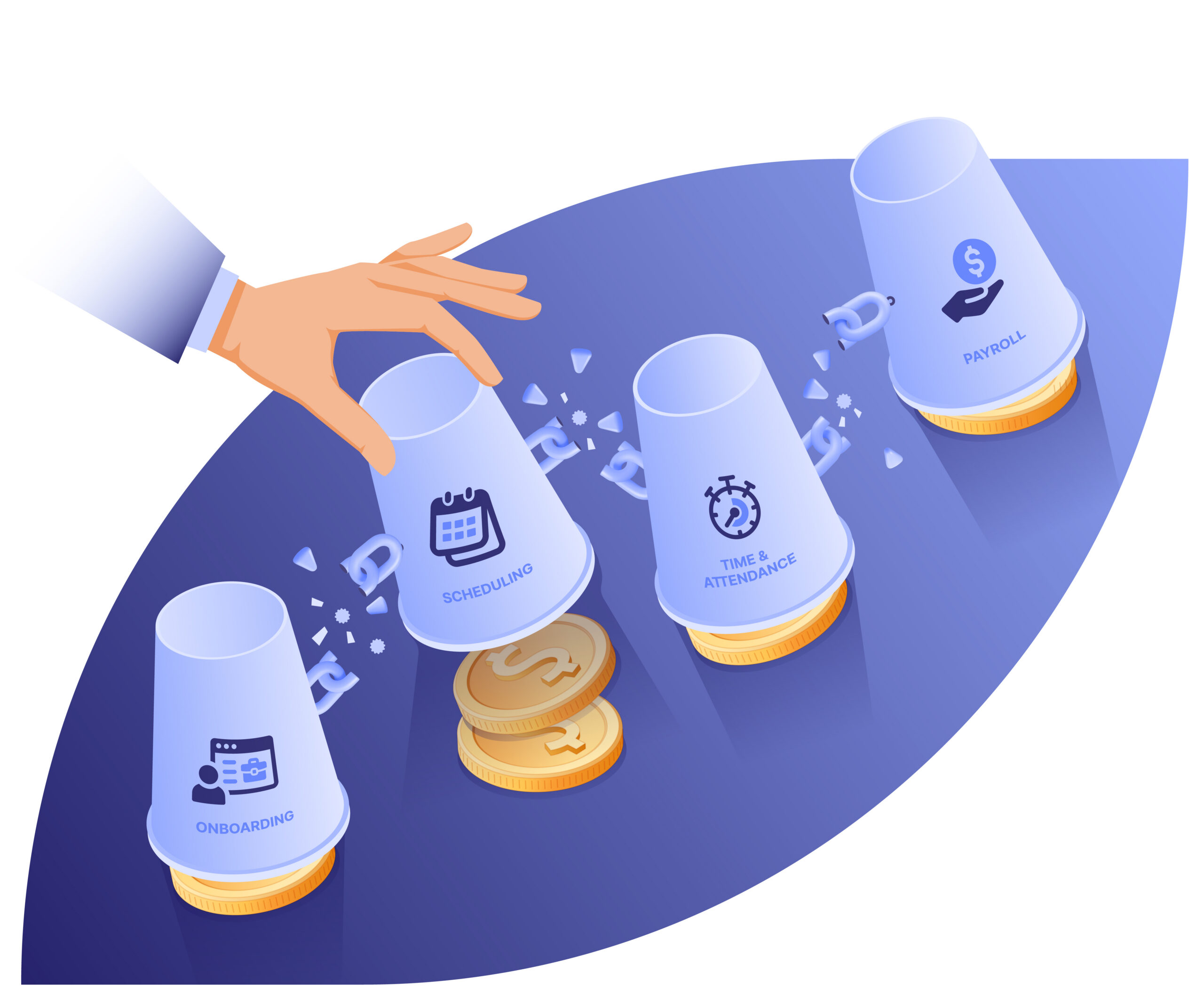
Each disconnection adds time between when an offer is accepted and when a nurse or staff member is on the floor. Every day of that gap is a day an agency fills the slot instead:
Talent acquisition doesn’t connect to onboarding
→ new hires sit in limbo longer than necessary
Onboarding doesn’t connect to scheduling
→ credentialed hires aren’t available to fill shifts
Scheduling doesn’t connect to payroll
→ overtime gets miscalculated or missed entirely
These are just a few scenarios, and they compound. Plus, research shows that even two payroll errors are enough to push 50% of employees to start looking for a new job. Inaccurate pay accelerates the exact turnover that drives agency dependency in the first place.
The fix: A single connected system tightens the pipeline from offer to floor — faster onboarding, earlier scheduling, accurate pay from day one. Less agency reliance, less early-tenure turnover.
The Workaround Tax
Every workaround has a cost. When systems don’t talk to each other, someone builds a spreadsheet, sends a follow-up email, or reconciles data by hand. Each one is a place where an error can enter — and together, they consume the capacity of your most experienced HR and finance staff, who should be focused on strategy, not data entry. For a deeper look at how HR leaders are getting ahead of this kind of operational chaos, see our guide to six healthcare HR strategies.
The fix: Connected systems give your team their time back. When reconciliation is automated and exceptions surface themselves, your staff shifts from reactive to proactive — a capacity gain that shows up in retention, compliance, and hiring.
The Compliance Cost:
A Growing Risk for Workforce Management in Home Care
For home care operators specifically, disconnected systems carry a compliance exposure that finance leaders often underestimate — and regulators are increasingly focused on.
Home care agencies frequently manage large, distributed workforces of hourly caregivers who may work for multiple clients in a single week, with pay that varies by visit type, payer source, and geography. The U.S. Department of Labor has consistently prioritized home care enforcement, and the compliance surface area is wide. For a multi-state or high-volume home care operator, the specific risks include:
State-specific wage and hour laws that vary materially across jurisdictions and change regularly
Paid sick leave requirements now mandated in the majority of U.S. states, each with different accrual and usage rules
Overtime miscalculation for caregivers working across multiple clients or locations in a single workweek
Worker misclassification between employee and independent contractor status, which triggers back-pay liability, tax penalties, and benefits exposure
Audit trail gaps that leave organizations unable to defend their pay practices if a DOL inquiry or class action complaint is filed
Any one of these, left unmanaged, can result in expensive back-pay settlements.
When the systems that track hours, classify workers, and calculate pay are not integrated, the default is manual oversight. Manual oversight scales poorly. It also fails silently — often for multiple pay cycles before anyone catches it.
The fix: A connected payroll platform with built-in compliance logic applies the correct rules automatically by state, role, and pay type. It doesn’t rely on someone remembering to check. It doesn’t fail because a payroll administrator is out sick. It creates an auditable record that protects the organization — before a DOL inquiry, not after.
See It For Yourself
If you’re managing workforce operations across disconnected systems today, the question isn’t whether it’s costing you — it’s how much.
Ready to see what connected workforce management for healthcare actually looks like in practice?