
The worlds of healthcare and technology have one thing in common: neither of them stand still. It feels like new advances in both fields appear suddenly and take off. Then come the new regulations and professional guidelines.
It may be a lot to adjust to, but there is a sunny side to the constant change. Most of time, these new advances improve work and/or care.
The best way to manage digital transformation in healthcare is to embrace new trends and stay ahead of the curve. So, what’s on the horizon?
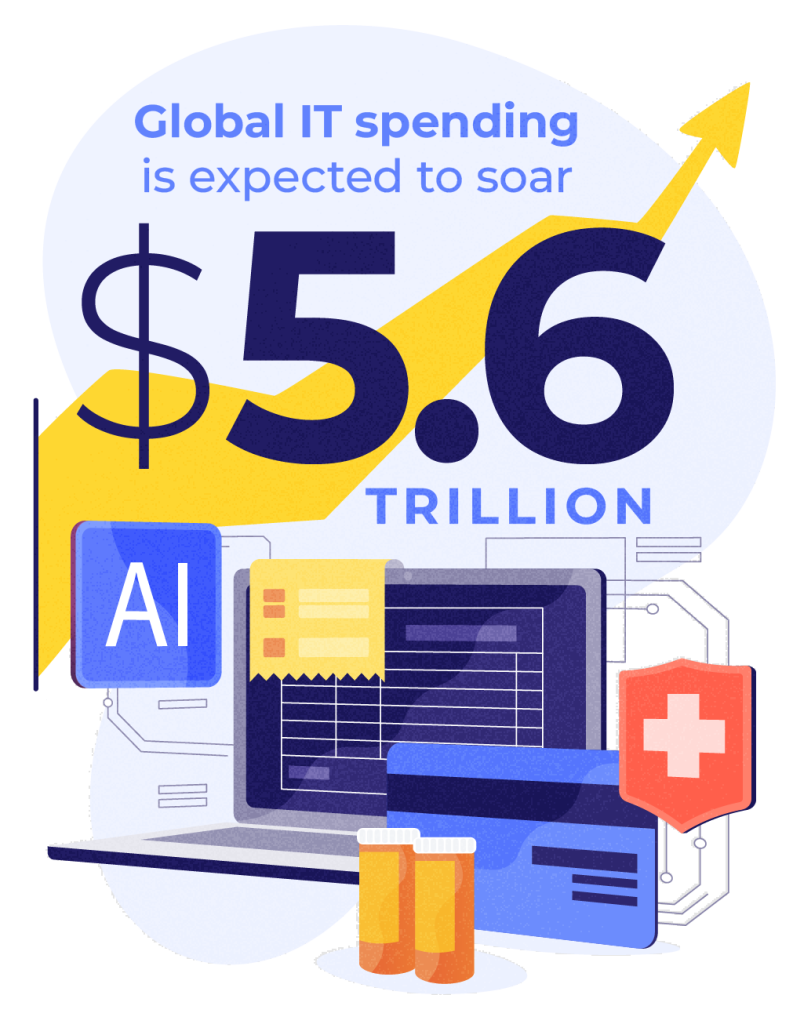
Mostly, 2025 will bring more advancements. AI has altered technology, creating a surge in the tech market. In fact, global IT spending is expected to soar to $5.6 trillion.
There are a few key trends to watch in 2025, from shifting AI models to intentional use of data.
Agentic AI and automation
AI is a hot topic that will continue to trend in 2025 and beyond. Several types of artificial intelligence have been around for decades, but the field is really still in its infancy.
2025 will bring more mature forms, like agentic AI, more humanized tech for adaptive workflows, and a better patient employee experience.
Agentic AI
You’ve heard of generative AI. Now, prepare for agentic AI. But what is it?
Agentic AI is the systems and models that can make decisions or achieve goals without human guidance.
These systems use several technologies:
- automation
- machine learning
- natural language processing
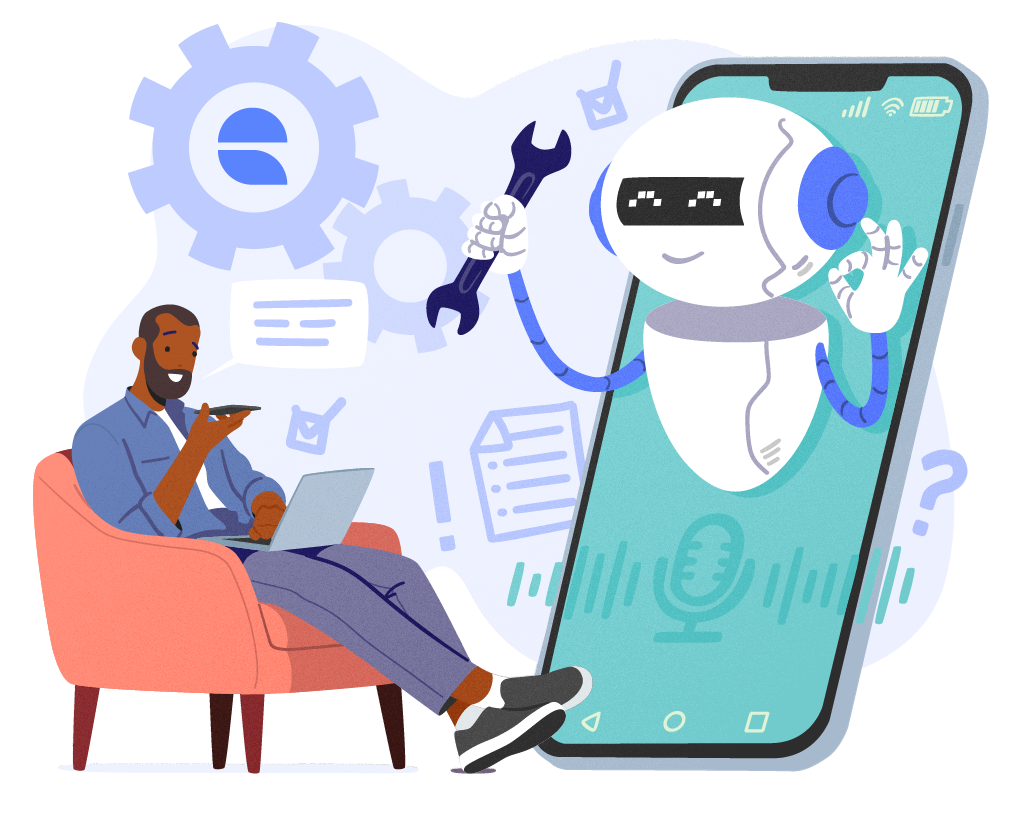
As the name suggests, it uses AI as an agent to act on your behalf. But unlike generative AI, agentic AI works to accomplish goals rather than create content. It does so by triggering a workflow that it can complete independently.
In healthcare, agentic AI will help providers and businesses complete a complex sequence of tasks without guidance. These may be patient-related care or administrative workflows.
For instance, if the goal is to hire a qualified nurse, agentic AI automates the entire recruitment process. Rather than using AI for one task, like filtering resumes, agentic AI will make decisions and manage the whole sequence.
It will find talent, review resumes, schedule interviews, and complete initial screening independently. These advances will offload tasks and streamline work even further, ushering in more efficiency.
Smarter and adaptive workflows
Sentiment around AI and data is also shifting. It’s no longer top priority just to use digital tools and collect endless streams of data. Instead, putting AI and information to use in more meaningful ways is of growing importance.
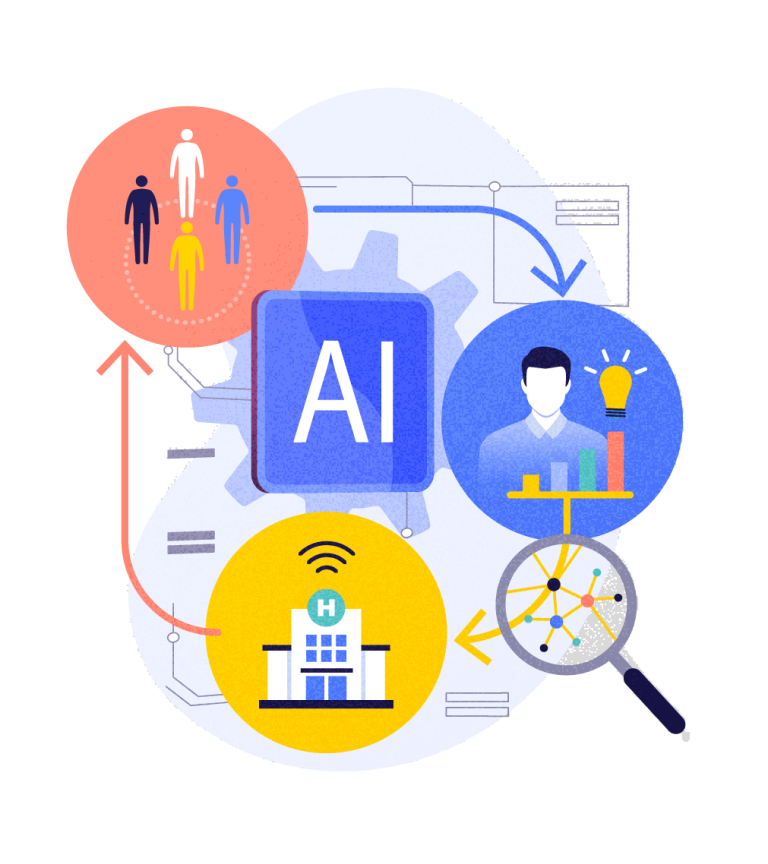
Here, AI will become more humanized, learning about your staff as they use digital tools. Technology will track preferences, frequent activities, personal style, and tone and tailor workflows to the user experience.
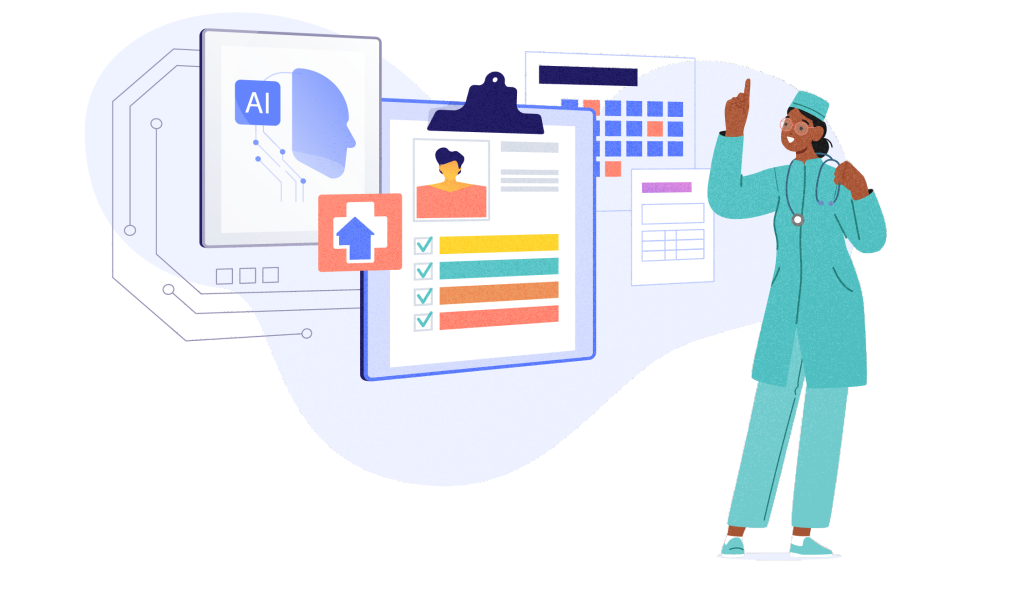
Healthcare scheduling is one area that may benefit from these changes. AI and automated scheduling tools can learn what shifts staff prefer or are likely to pick up and automatically offer them to the most suited staff. These strategies can help fill openings and manage shortages or understaffing.
Better employee experience
The impact of these smarter and more independent forms of AI is a better overall experience for healthcare workers and teams. Tech becomes an efficient tool and partner rather than one more thing to manage.
Staff can reclaim some of their time to focus on meaningful tasks. Ultimately, a better experience will lead to higher staff satisfaction and a boost in productivity.
Connected tech ecosystems
Businesses have spent the last few decades or so adopting a variety of digital tools. That has left practices with a mishmash of tools to fit different functions, and most of them don’t work together.
All-in-one platforms and purposeful integrations will help streamline and pare down the tech involved. Businesses will see lower costs, better information sharing, and more efficiency.
Purposeful integrations
All-in-one platforms are powerful tools that reduce the number of separate software solutions your business needs. However, it’s unlikely that a single platform will cover every requirement, so using a few additional tools is often still necessary.
Yet, tech fatigue is a real problem for HR staff that causes inefficiency. Recent surveys of 2,000 HR staff found that more than half are overwhelmed with information in too many channels. They also admit to wasting 2.7 hours every week dealing with distractions when working with multiple solutions.
Intentional use of technology will top the priority list for digital transformation in healthcare. Focus on platforms and solutions with integrations to help create a connected ecosystem.
Lower delivery costs
The reality is that AI and technology add costs to your bottom line. However, a stack of underused tech is even more costly because its value is wasted.
Downsizing the number of separate tools into an all-in-one platform can lower your costs. These trends help you build an optimized stack with tools you actually need and use and strip away extra fees.
More accurate information sharing
As better connections develop, your tools will share information with more accuracy. Healthcare teams and HR staff won’t have to navigate so many channels.
Instead, communication will improve, and teams will stay updated with the most current information. This will translate to fewer mistakes that may affect patients and staff, like payroll or scheduling errors.
Personalization using data
Relevant analytics
The healthcare sector is overwhelmed with data, and much of it isn’t necessarily helpful for businesses. However, one of the attractive qualities of AI is that it learns and adapts based on input.
As AI evolves, healthcare teams can expect to see more relevant insights. Tools will learn from user and business patterns, as well as preferences, and suggest tips or strategies.
These may help enhance profits, meet reporting requirements or minimum standards, or manage your workforce.
Better decision-making
Ultimately, the result is smarter decision-making. With actionable insights and personalized strategies, your team gains a deeper understanding of what’s happening with the business. You’ll know exactly what steps to take next—and how those insights drive real-time impact. That kind of clarity gives your business the edge it needs to navigate the challenging healthcare landscape.
Future-ready with digital transformation in healthcare
AI and data are changing the healthcare industry, including how caregivers work and interact with each other and patients. Staying ahead of the curve with next-gen tools is the key to embracing the future and its changes.
Empeon’s all-in-one payroll platform uses advanced technology to help you build a resilient workforce. Streamline your HR process with intelligent workflows, automated scheduling and payroll, and relevant integrations.
See the platform in action and discover even more features. Take a tour.